Rolf Anderson,  Vermont <www.ROLFANDERSON.net> Home

ROLF ANDERSON  ::  Vermont > Home


  Landscape Conservation  l  Environmental Education  l  Photography  l  French Lessons   


Sweden

Sweden > Hem i Sverige


Vermont > Home in USA

Vermont

LANDSCAPE + CONSERVATION

Hazen's Notch Association
High Ponds Farm


ENVIRONMENTAL EDUCATION

Hazen's Notch Association
Nature Photography


PHOTOGRAPHY

Introduction
Nature, Photographs
+ The Mind's Eye

Biography
Inspiration, Experience
Reflection, Focus
Galleries
Links
Montgomery, VT
Article by Nat Worman


FRENCH LESSONS

Home
Schedule of Classes

France + Belgium
Excellent Teachers
+ Life Experiences

Bilingualism + Parents
Bilingualism in Children


WEB CONCEPT

  • Coltsfoot Design


    MEMBER

  • Trout River Network


    Last updated
    May 15, 2009.


  • ROLF ANDERSON

       Welcome. I am happy to share with you some of my work relating to Landscape Conservation, Environmental Education, Photography and French Lessons.

       The following is a summary of my work in these areas with links to a few of my web pages and to other web sites with more information about my work. If you would like to know more, my contact information is at the bottom of this page.


    Landscape + Conservation

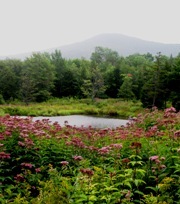
       I am a steward of part of a beautiful landscape in northern Vermont. I spent many years studying what was there and what had happened to this place before I came on the scene - before doing anything at all. I spent many hours watching the beavers in their ponds, built where cows once grazed. They eventually grew accustomed to me, especially to my scent which lingered on freshly cut poplar saplings which I left by the pond's edge.

       In bringing back the orchard and the meadows, bluebirds and butterflies returned in great numbers. I left numerous tall trees (some dead, most alive) for raptors to perch and other birds to find cavities for nests. There are even more wetlands now which support many amphibians. The black bear love all the beech trees at the base of the mountain. The bobcat finds shelter and privacy among the rocky outcrops and caves. The meadow and its edge are maintained in succession "layers" which provide incredible food and cover for so many species. Even the ditches have been naturalized with stone to simulate native streams while protecting woods roads which allow walkers access to the land.

       It's fun to pay special attention to the smallest details in restoration work. However when I look at the habitats that I am working to improve, I try to look at the work from a landscape-scale. This means taking a broader view, not just in terms of area, but also in terms of natural systems. We often first perceive nartural areas as homes to one or another animal just as we think of our own homes as unique territories with occasional visitors. Species diversity is wonderful when you can find it. It can also be encouraged. Through plant succession, and natural and human disturbance, habitats evolve. The species mix each area supports can change with the changes in the land. I have achieved the best results when I let the site conditions direct the habitat management plan. And always seek diversity.

       Visit the Hazen's Notch Association. See and learn about our land stewardship and conservation. hazensnotch.org
       top of page


    Environmental Education

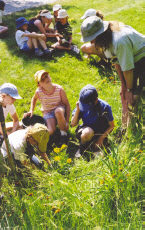
       The fascination with nature for most people begins at a very young age - with the flight of an insect, the smell of a flower, the feeling of a tree's rough bark as you climb, the sound of a startled squirrel, the sight of a cloud's shadow moving across the ground.

       No matter how many years go by since those wonderful summer days at Grassy Hill, Painter Hill, and Steep Rock, it's the memory of those early experiences as a young person which continues to inspire our philosophy of teaching children about nature and their place in it. After the wonderful self-discovery in the woods and old meadows of Woodbury, exploring through the Litchfield Hills, learning mountaineering skills at NOLS in the Rockies, I spent over a dozen years guiding people through the mountains and lakes of the northeastern USA, teaching what I knew of living and traveling safely in wild areas.
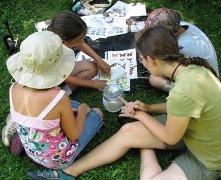
       My inspiration for creating a nuturing outdoor learning environment for children came from Dr. Mitchell Gratwick of Roxbury, Connecticut. The passion for teaching outdoor skills and teaching methodologies came from William Garrison. Paul Petzoldt created NOLS which gave me the wilderness living and travel skills and the desire to be a mountain guide. Getting to know Paul Petzoldt personally and reintroducing him in 1984 to NOLS which he founded in 1965 was satisfying for me. This enabled me to show my gratitude to the person who meant so much to my most important training. After many years of guiding and teaching adults, now I have come full circle and mostly teach young people about their natural world. It is incredibly satisfying, and I believe, important work. I know that we are making a difference in the lives of young people.

       Visit the Hazen's Notch Association. See and learn about our environmental education. hazensnotch.org

       top of page


    Photography

       Taking photographs is easy. Everyone has a camera of one kind or another and takes pictures - snapshots, of friends, family, places, events, views and the like. Making good photographs, of course, takes more than just having good equipment and being in the "right place." I will always remember the advice that my father gave me when I first wanted to take photographs at a young age. "Practice framing your subject first. When you think you're ready, I will buy your first roll of film." It is tempting to take photographs of everything new and unusual and beautiful one sees. It's better to use all the senses and learn first.

       My first photographs reflected my scale of perspective as a young person. I took photos of a spider's web, a single stalk of timothy, water drops falling from moss, animal-shaped pieces of ice in a stream, the trunks of evergreen trees, the shadows of snow drifts and clouds, always clouds.

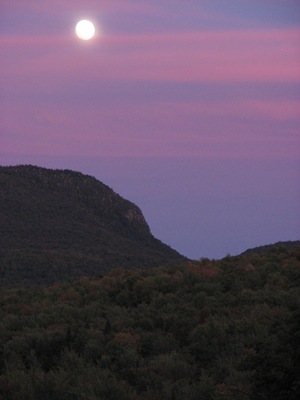
       I have become enamored of the most transitory moments, and the edges of seasons. I have favorite light conditions for photographing water, flowers, snow and leaves. I love to document the education programs we lead at those those special learning moments when a child's interest, and excitement of self discovery all converge. You can see many of my images on the web site of the Hazen's Notch Association and in several galleries in northern Vermont.


       Visit the Rolf Anderson Photography web pages. Read about and see my photographs. Nature, Photographs + the Mind's Eye

       top of page


    French Lessons

    The Need for French Instruction

       In northern Vermont we still have a rich tradition of French Canadian or Québécois culture. But we are quickly losing it. Growing up in Connecticut 30 years ago one could take French or Spanish starting in 7th Grade. In 2009 there are few schools in Vermont which offer foreign languages before ninth grade. I am trying to help the French language stay alive in northern Vermont through offering French lessons to children in Franklin County. I am not a native speaker of French but have acquired an excellent knowledge of the language from school. I studied French for 6 years through Level 6. After high school I lived in Belgium for one year and spoke French every day. During this time I lost all traces of American English influences on my French. I never understood the Wallon dialect. Fortunately almost all speakers of Wallon in Belgium could speak standard French. I eventually thought in French.

    Inspiration

       I love French and I love teaching French. I think it helped that my father spoke nine languages. I must admit though that the "language gene" didn't find its way to my siblings the way it did with me. My father's strength was in Swedish and the other Scandinavian languages. But then both of his parents had been born in Sweden. My father's knowledge of Scandinavian languages was very helpful during WW II when he served as head of the Scandinavian Departmanet of US Military Intelligence at the Pentagon. My mother's French which she learned in school was good enough to reinforce my interest in learning French. Dad encouraged me with his facility in speaking French. I was inspired by my parents and my teachers.

    Cultural Immersion

       Later I developed a facility in speaking French while living in Belgium for a year. I was assigned to NATO headquarters at SHAPE in Mons, but lived with a Belgian family on their dairy farm. The family I lived with spoke Flemish with each other and French with me. They and my neighbors could not speak English. It was a wonderful experience. In Wallonia (southern Belgium) and France, people thought I was a French-speaking Flemish person; when I traveled to Switzerland people there thought I was French Canadian; now when I travel in Québéc, French Canadians think I am a French speaking English Canadian. I thank my teachers who gave me the foundation which enabled me to develop my ease of speaking French while living in Belgium.

       I was drawn to this area of northern Vermont near the border with French-speaking Québéc so that I could continue to speak French after living in Europe for three years. The two years I lived in Germany enabled me to learn German through immersion in the culture. That experience taught me how one could more quickly begin speaking a language without learning all of the grammar first. That is the approach which I use with children who are in elementary school. It has been very successful.

    Teaching Philosophy

       In my classes children develop an understanding of how spoken French and English are organized while acquiring speaking ability starting on the first day. Conversations reflect the children's own interest in relationships: to each other, between family members, their environment, home, school, through hobbies, activities, games and food (Café Bibliothèque !).

       My specific approach to teaching French to children is designed to create young speakers who do not translate in their minds. Their spoken French is a result of my helping them to acquire “new language” (new words for known meanings) which just happen to be in French. My phrase for this is linguistic equivalency.

       I first understood this concept of linguistic equivalency in Belgium. Vincent Craeye was six years old at the time. I lived with him and his two-year old brother Christophe, and their parents Remi and Christiane Craeye. Vincent could say whatever he wanted to say in both Flemish and French. But when I asked him to translate something from French into Flemish so that I could learn to say it in Flemish, he couldn't make the translation. Even though he could in fact say the phrase in both languages. His six-year old brain didn't translate the way an older person's brain does. That was why he learned so much speech so quickly in two languages - simultaneously.

       At times I will make use of my students' logic functions so that they understand the structure of their own maternal language. But most often I take advantage of the fact that at their young ages, they can acquire language with incredible ease. Good pronunciation is important to being understood. Children's brains are wired to acquire good pronunciation quickly. Learning language stimulates the growth of neural webs in the brain which in turn faciltate learning other subjects more easily. Acquiring a second language strengthens certain areas of the brain that are critical for learning.

    Tangible Results Create Confidence

       My classes include lots of positive reinforcement. The children respond enormously to it. The children who learn from me are all smart. Some know it and others don't. I help each and every child realize that they can indeed learn to speak French. After eighteen ninety-minute classes over a four-month time span, my 4th/5th grade students are speaking simple, grammatically correct sentences in French with very good pronunciation. The result is that they now feel smart, they believe in themselves and their abilities. And speaking French is more than “just knowledge”, it is a skill. It is challenging, it requires concentration but it is fun. And when you can do it, you know it and so do others. The ability to speak French in northern Vermont has strong social value. Vermonters of French Canadian descent are proud of their heritage. Speaking even a little French here raises self-esteem which increases confidence. Confidence is a good thing in children.

       The result is a three-dimensional comprehension of language and conversation where students can infer meanings using known vocabulary and phrases and new words heard for the first time. Children become enthusiastic and confident speakers with excellent pronunciation. The ease with which they speak with natural intonation and rhythym reinforces their confidence and gives them a superb advantage for the day when they start formal language study in high school.

       Visit the French Language Lessons web pages. Read about my classes of instruction. French Lessons

    - Rolf Anderson

       top of page


    Contact


    Rolf Anderson
    at this address: firstname at rolfanderson.net


    For more information about my work as a landscape steward, conservationist, naturalist, photographer, environmental educator or French teacher, please contact me. My mailing address, telephone number and email address are below.


    Copyright 2001-2009 Rolf Anderson  All Rights Reserved.

      Rolf Anderson  l  P.O. Box 479  l  Montgomery Center VT 05471  l  802.326.4789  l  firstname @ rolfanderson.net